01LANGUAGE
Complex morphology
Words can encode grammatical information through multiple affixes, complicating segmentation and translation.
MORPHOLOGY / TOKENIZATION
Neural machine translation from Classical Nahuatl to English using NLLB-200, historical parallel data, and parameter-efficient fine-tuning.
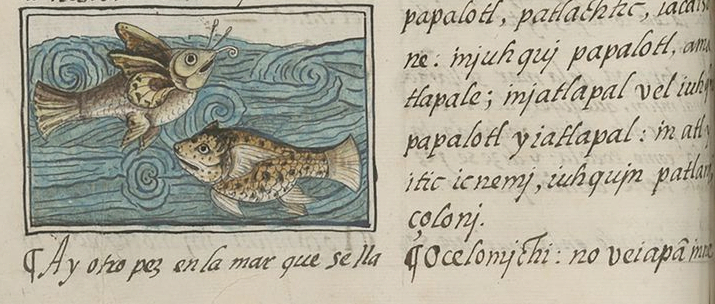
Classical Nahuatl is a low-resource historical language. Translating it requires addressing issues that are less visible in high-resource languages.
Words can encode grammatical information through multiple affixes, complicating segmentation and translation.
Historical bilingual documents are scarce, making high-quality alignment and careful evaluation essential.
Variation in orthography and the cultural context of colonial-era texts make automated translation challenging.
The Florentine Codex provided the historical material for constructing an aligned dataset and a held-out test split.
Florentine Codex material
Extract and clean text
Create bilingual pairs
Extended NLLB vocabulary
Fine-tuning and evaluation
Research corpus with a persistent DOI and citation metadata.
NLLB-200 1.3B is an encoder–decoder Transformer. The research retained its tokenizer and extended the vocabulary for Classical Nahuatl.
Learnable low-rank updates to selected attention projections, limiting the number of trainable parameters.
Strongest chrF and TERKeep selected layers fixed while fine-tuning other parameters of the pretrained network.
Comparison strategySample active layers during optimization to explore an alternative efficient training process.
Highest BLEUDifferent metrics capture different aspects of translation quality. Higher BLEU and chrF are better; lower TER is better.
| Strategy | BLEU ↑ | chrF ↑ | TER ↓ |
|---|---|---|---|
| LoRA BALANCED | 3.0 | 27.0 | 76.0 |
| Layer Freezing | 2.4 | 21.0 | 78.0 |
| LISA | 3.8 | 24.0 | 80.0 |
Scores from this research experiment; these values do not imply production-ready translation quality.
LISA leads in BLEU, while LoRA achieves better chrF and TER, making LoRA the stronger balanced choice in these experiments.
Bars illustrate separate metrics; their lengths are not directly comparable.A paired, blinded evaluation assessed generated translations on three distinct dimensions, each rated from 1 to 5.
Means are descriptive; they do not establish statistical significance. LISA scored slightly higher in semantic adequacy, while LoRA led in fluency and cultural fidelity.
Average human scores across the three evaluation criteria.
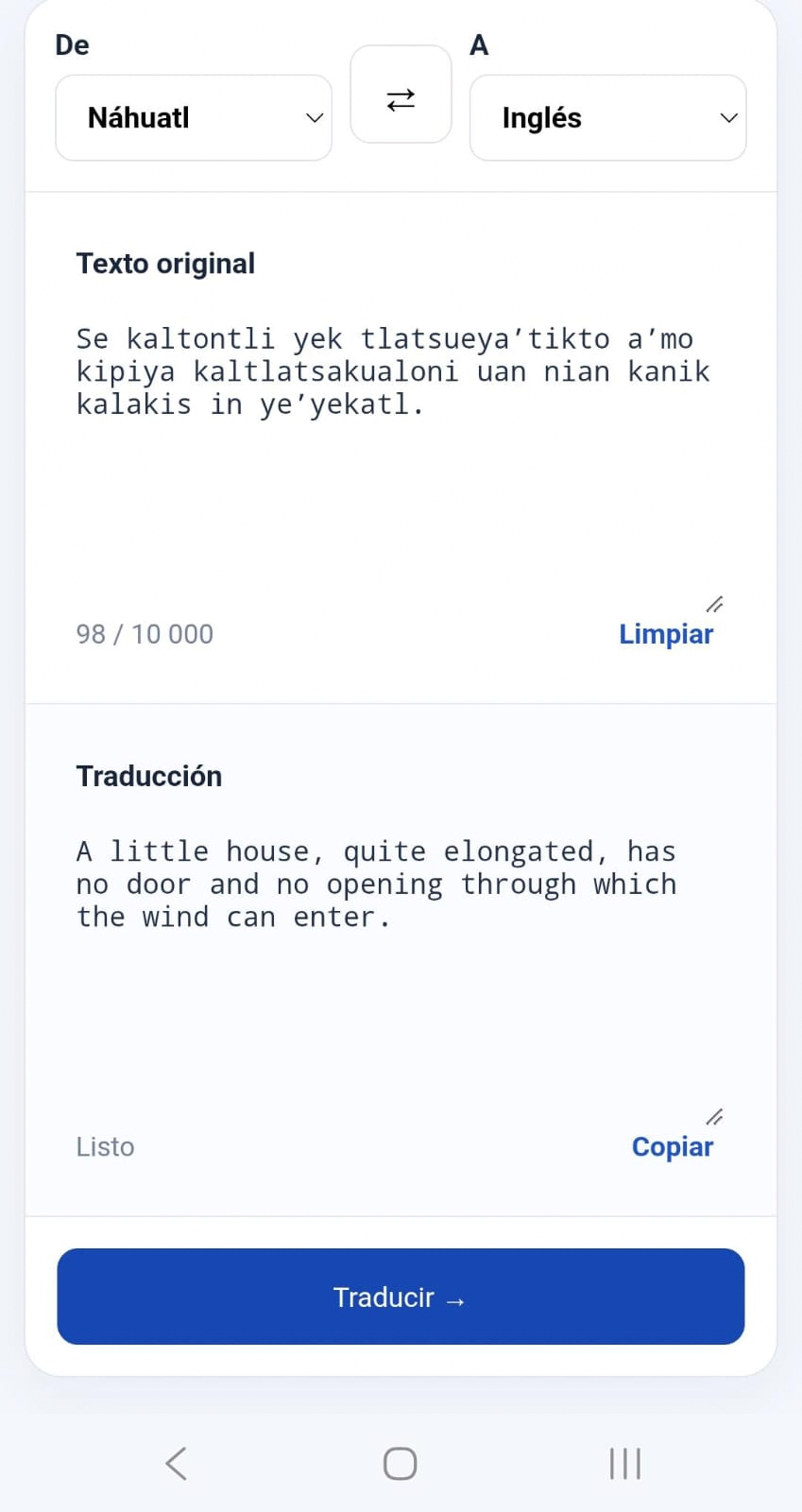
Four screenshots showing the project's translation examples. Select any image to expand it.
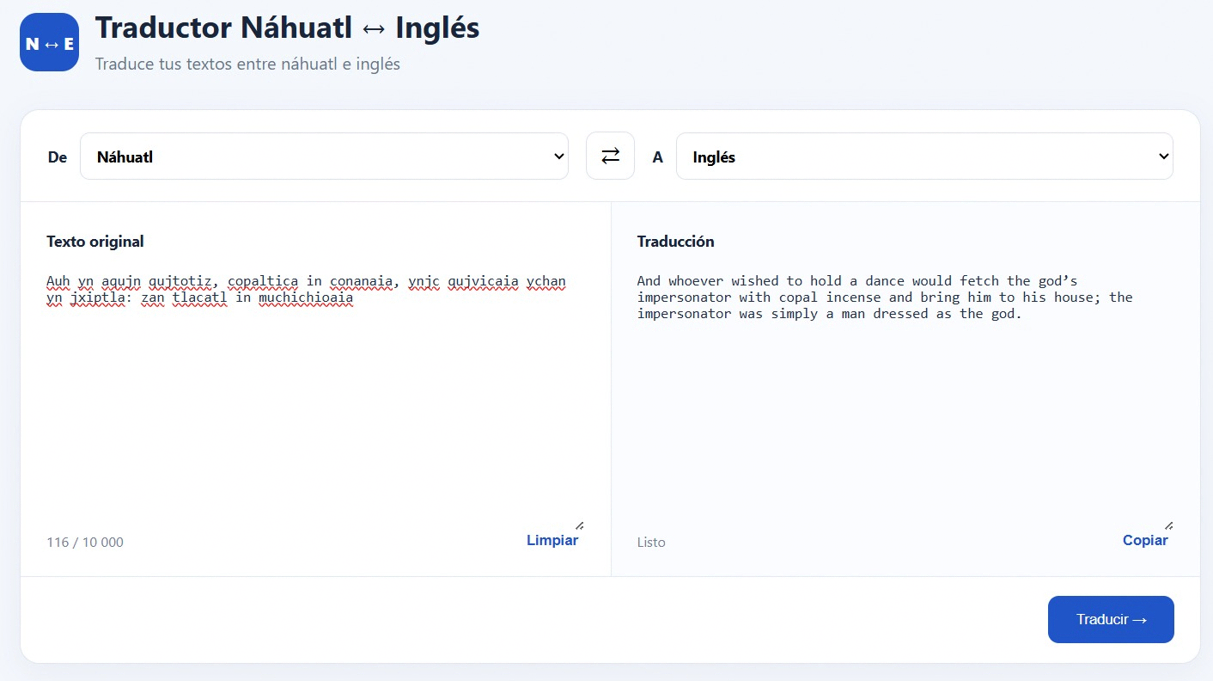
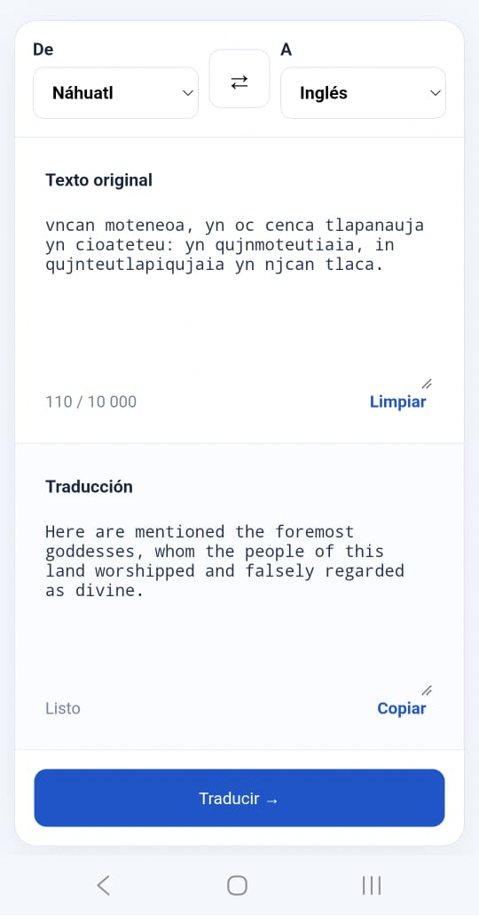
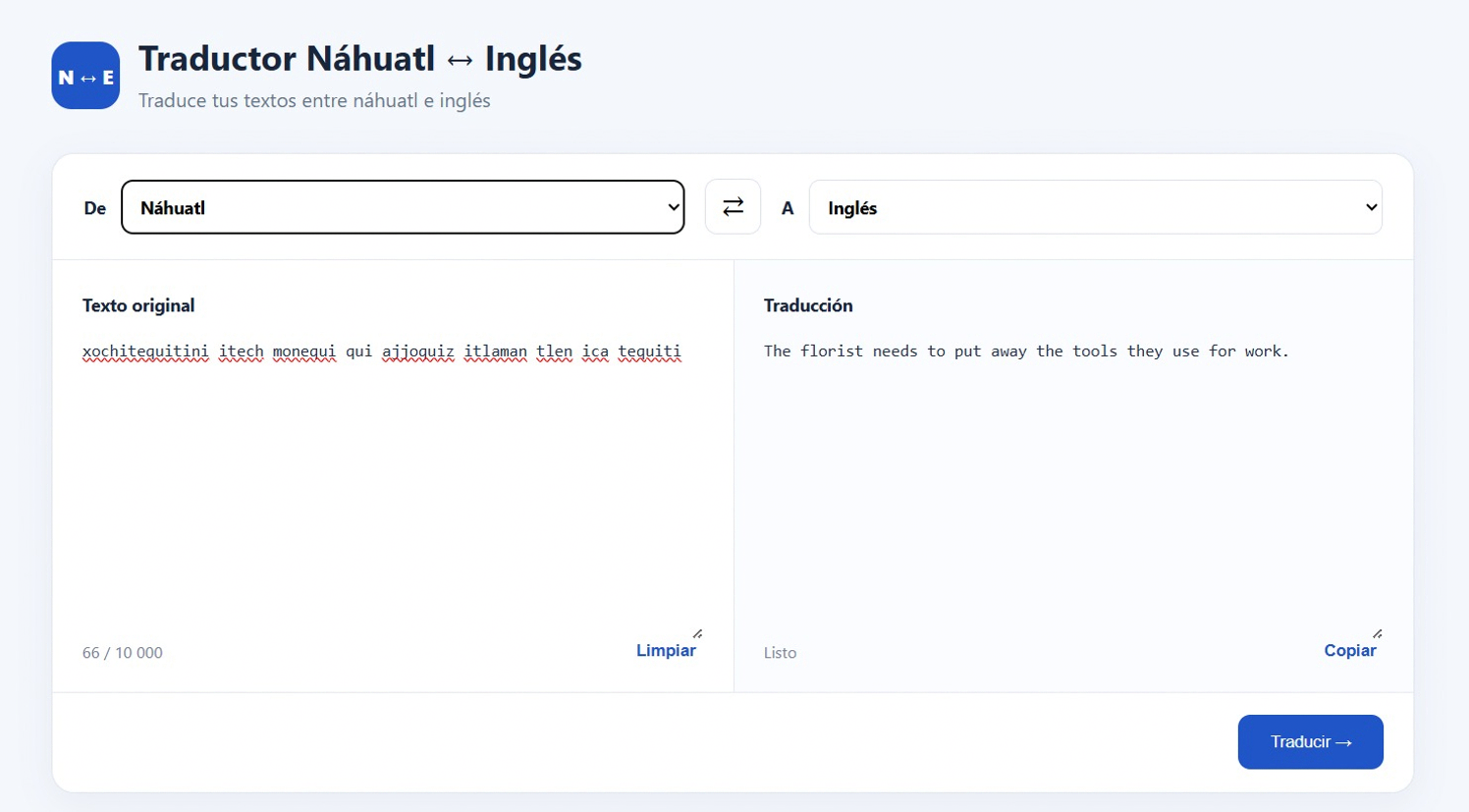
Beyond model scores, this research changed how I approach data preparation, experimentation, and the evaluation of language technologies.
Building a machine translation system for a historical, low-resource language taught me that the quality of the data and the evaluation process matters as much as the choice of neural architecture. Each stage of the pipeline introduces assumptions that must be examined rather than taken for granted.
Working with historical texts strengthened my skills in OCR cleanup, sentence alignment, corpus quality control, and reproducible dataset preparation. Small errors at the beginning can propagate through the entire translation pipeline.
Extending the NLLB-200 vocabulary showed me how the representation of words and subwords affects a model's ability to process a morphologically rich language. Tokenization and embeddings cannot be treated as incidental preprocessing.
Comparing LoRA, Layer Freezing, and LISA helped me reason about trainable parameters, computational constraints, and systematic comparisons. The most efficient strategy is not necessarily the best under every metric.
BLEU, chrF, and TER produced different rankings. Designing a blinded human assessment reinforced the need to consider meaning, fluency, and cultural fidelity—especially when working with historically significant language.
This project made me more careful about what experimental evidence can—and cannot—support. The resulting models are research prototypes, and the open corpus creates a foundation for further investigation rather than a claim that the translation problem is solved.
Access the published research dataset or copy its citation for future reference.
Published dataset with a persistent DOI.
View on Hugging Face ↗The full PDF is not linked on this portfolio page. It can be added after publication or sharing is confirmed.
PDF link pendingUc Torres, J. A. (2026). FlorentineCodex (Revision 9e3e0fb) [Dataset]. Hugging Face. https://doi.org/10.57967/hf/11168